Author: Γιώργος Ριζεάκος

  • Purple Jellyfish: A Permanent Resident of the Mediterranean

    Purple Jellyfish: A Permanent Resident of the Mediterranean

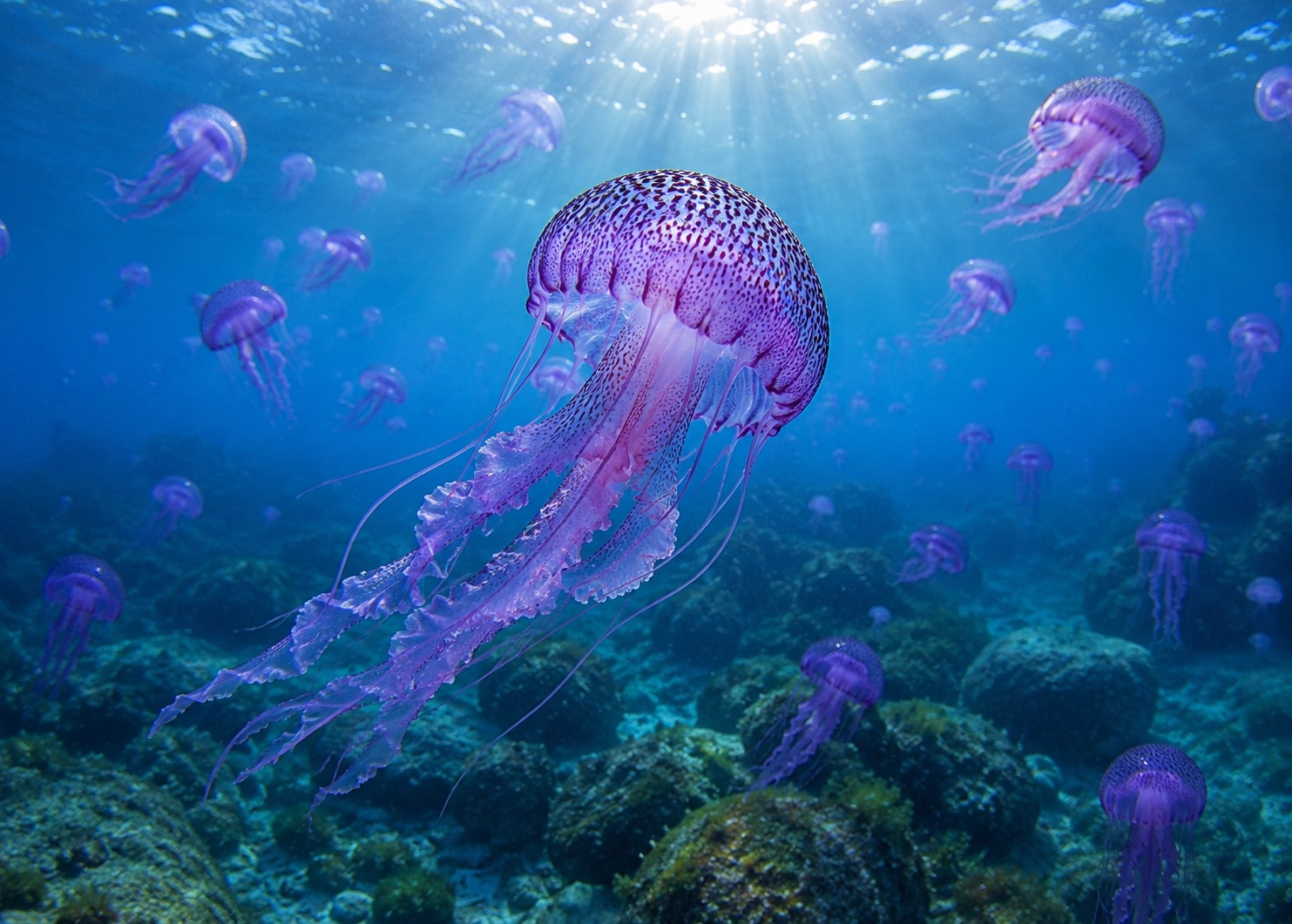
    The Purple Jellyfish (Pelagia noctiluca) is a natural inhabitant of the Mediterranean Sea and one of the most recognizable marine organisms found along the Greek coastline. Periodic increases in its populations, its interactions with swimmers, and the importance of scientific awareness highlight the need for a calm understanding and responsible coexistence with a species that has always been an integral part of the Mediterranean marine ecosystem.


    The Purple Jellyfish (Pelagia noctiluca) is perhaps the best-known jellyfish species in the Mediterranean. Although its periodic blooms often attract public attention and raise concerns among beachgoers, it is neither a recent arrival nor an invasive alien marine species. On the contrary, it has been a natural and permanent resident of the Mediterranean for thousands of years.


    Its population blooms occur periodically and are influenced by a complex combination of natural and environmental factors, including sea currents, water temperature, food availability and climatic conditions. As a result, its presence can vary significantly between regions and from one year to another.


    Although its sting can be particularly painful, the Purple Jellyfish is not a reason for panic. Proper information, simple precautionary measures and respect for the marine environment allow people to enjoy the sea safely, even during periods when jellyfish are more abundant.


    Key Characteristics of the Purple Jellyfish

    Characteristic Information
    Scientific Name Pelagia noctiluca
    Phylum Cnidaria
    Class Scyphozoa
    Distribution Mediterranean Sea, Eastern Atlantic and other temperate seas
    Status Native (non-invasive) species
    Bell Diameter Usually 5–15 cm
    Diet Zooplankton, small crustaceans, fish eggs and larvae
    Natural Predators Sea turtles, certain fish species and other marine animals


    Understanding the biology of the Purple Jellyfish and its ecological role is essential for developing a balanced perspective based on scientific knowledge rather than misinformation or fear.


    The Biology of the Purple Jellyfish


    The Purple Jellyfish (Pelagia noctiluca) belongs to the phylum Cnidaria and the class Scyphozoa, commonly known as the “true jellyfish.” It is one of the most characteristic pelagic species of the Mediterranean because it spends its entire life cycle in the open sea. Unlike many other jellyfish species, it does not have a benthic polyp stage attached to the seabed.

    Its body has a bell-shaped form, typically measuring between 5 and 15 centimeters in diameter. Its distinctive pinkish-purple to violet coloration is produced by natural pigments within its tissues. The species possesses eight long tentacles and four oral arms, all covered with millions of cnidocytes—the specialized stinging cells used both to capture prey and for defense.

    Its diet consists primarily of zooplankton, fish eggs and larvae, small crustaceans, and other microscopic marine organisms. In this way, the Purple Jellyfish plays an active role in Mediterranean food webs, forming a natural link in the marine food chain.

    At the same time, it serves as prey for several natural predators, including sea turtles—particularly the Loggerhead Turtle (Caretta caretta)—certain pelagic fish species, and other marine animals that have evolved to feed on jellyfish as part of their natural diet.

    Its presence in the Mediterranean is far from a recent phenomenon. On the contrary, Pelagia noctiluca has been a natural component of the Mediterranean ecosystem for thousands of years. What changes periodically is not its existence, but the size of its populations. During certain years, favorable environmental conditions lead to population blooms, resulting in large numbers of jellyfish appearing near coastal areas.


    Biological Profile

    Characteristic Information
    Life Cycle Entirely pelagic, without a benthic polyp stage
    Body Shape Bell-shaped
    Bell Diameter Usually 5–15 cm
    Coloration Pinkish-purple to violet
    Tentacles Eight long tentacles
    Oral Arms Four
    Stinging Cells Millions of cnidocytes used for feeding and defense
    Main Diet Zooplankton, fish eggs and larvae, small crustaceans
    Natural Predators Sea turtles, pelagic fish and other marine species


    The Purple Jellyfish is therefore not simply a species that occasionally affects beach activities. It is an integral part of the Mediterranean’s natural biodiversity, contributing to the balance and functioning of the marine ecosystem.


    Why Do Purple Jellyfish Appear in Large Numbers?


    Large gatherings of the Purple Jellyfish (Pelagia noctiluca) are a natural phenomenon that occurs periodically throughout the Mediterranean and in other temperate seas around the world. These so-called population blooms do not indicate that the species has recently arrived. Instead, they reflect periods during which environmental conditions favor the growth, survival and concentration of large numbers of individuals.

    This is a highly complex phenomenon that cannot be explained by a single cause. Scientists agree that population blooms result from the interaction of several natural factors, including water temperature, sea currents, food availability, weather conditions and the species’ own biological cycles. Sea currents can also transport large groups of jellyfish from offshore waters toward the coastline, creating the impression of a sudden “invasion.”


    Why Do Population Blooms Occur?

    Factor Possible Influence
    Water Temperature Influences population growth and development
    Sea Currents Transport large concentrations toward coastal areas
    Food Availability Favors survival and reproduction
    Climatic Conditions Affect overall population dynamics
    Ecosystem Changes Remain the subject of ongoing scientific research


    In recent years, researchers have also investigated the possible influence of climate change, overfishing, and broader changes in marine ecosystems. Rising sea temperatures, reductions in certain natural predators, and shifts in marine food webs may, under some conditions, contribute to more frequent or more intense jellyfish blooms. However, scientists emphasize that the phenomenon remains multifactorial, and many aspects continue to be actively studied.


    For this reason, overly simplistic explanations and absolute conclusions should be avoided. The appearance of large numbers of Purple Jellyfish does not necessarily mean that the marine ecosystem has collapsed, nor does it imply that a single factor is responsible for every bloom. Each event should instead be evaluated within its broader ecological context through continuous scientific monitoring, systematic data collection, and responsible public communication.


    Understanding these natural processes allows both scientists and the public to interpret jellyfish blooms with greater accuracy and without unnecessary alarm, promoting informed decisions based on evidence rather than speculation.


    Effects on People and the Marine Ecosystem

    The Purple Jellyfish is a natural component of the Mediterranean marine ecosystem and plays an important role in its food webs. However, during periods of increased abundance, it can affect both human activities and certain functions of coastal marine ecosystems.


    For swimmers and beachgoers, the most significant impact is its sting, caused by the cnidocytes (stinging cells) located on its tentacles. Contact with the tentacles may result in intense pain, a burning sensation, redness and localized swelling. In some cases, blisters or prolonged skin irritation may also occur.


    Most symptoms subside within a few hours or days. However, individuals with allergies or increased sensitivity may experience more severe reactions and should seek immediate medical evaluation.


    Large jellyfish blooms may also temporarily affect coastal tourism, outdoor recreational activities, and, in some cases, small-scale fisheries. In areas where jellyfish densities become particularly high, local ecological effects may occur due to increased predation on zooplankton and fish larvae.


    Despite these impacts, it is important to emphasize that the Purple Jellyfish is not an enemy of the sea. Like every native species, it forms part of the Mediterranean’s ecological balance. Its presence reflects complex natural processes that have shaped the region’s marine ecosystems for thousands of years.


    Scientific knowledge and a better understanding of the species’ ecology contribute both to the protection of public health and to the conservation of the marine environment itself.


    Main Effects of Purple Jellyfish Blooms

    Area Possible Effects
    Swimmers Painful stings, skin irritation and temporary discomfort
    Tourism Temporary reduction in swimming and recreational activities
    Fisheries Occasional impacts on coastal fishing operations
    Marine Ecosystem Increased predation on zooplankton and fish larvae during large blooms
    Public Awareness Greater need for accurate scientific information and responsible communication


    Rather than viewing the Purple Jellyfish solely as a nuisance, it should be understood as a native marine species whose population naturally fluctuates over time. Responsible public information and evidence-based management help reduce unnecessary concern while promoting a better understanding of Mediterranean marine biodiversity.


    What to Do If You Are Stung


    Although a sting from the Purple Jellyfish is often extremely painful, it is not life-threatening in most cases. Proper first aid can significantly reduce pain, minimize skin irritation and help prevent complications.

    If you come into contact with the tentacles of a Purple Jellyfish, the following steps are recommended:


    Leave the water safely and remain as calm as possible.


    Do not rub the affected area, as friction may trigger additional cnidocytes to discharge more venom.


    Rinse the area thoroughly with seawater. Freshwater is not recommended, as it may stimulate any remaining stinging cells to release additional venom.


    Carefully remove any remaining tentacle fragments using tweezers or another suitable object, avoiding direct contact with your bare hands.


    Apply a cold pack or ice wrapped in a cloth to help relieve pain and reduce swelling.


    If you experience severe pain, widespread skin reactions, difficulty breathing, dizziness, fainting, or any other serious symptoms, seek immediate medical attention or contact the nearest healthcare facility. Individuals with a known history of severe allergic reactions should be particularly cautious.


    It is equally important to avoid treatments that are not supported by scientific evidence, such as applying ammonia, alcohol, or other widely circulated “home remedies.” First aid should always follow the recommendations issued by recognized medical and public health authorities.


    First Aid for a Purple Jellyfish Sting

    Recommended Not Recommended
    Leave the water safely Rubbing the affected area
    Rinse with seawater Rinsing with freshwater
    Carefully remove tentacle fragments Touching tentacles with bare hands
    Apply a cold pack wrapped in cloth Using unverified home remedies
    Seek medical attention if severe symptoms develop  Delaying medical care when serious symptoms occur


    Most jellyfish stings can be managed successfully with appropriate first aid and careful observation. Staying informed and following evidence-based recommendations is the best way to reduce both discomfort and unnecessary concern while enjoying the Mediterranean Sea.


    ALKIA’s Position


    The presence of the Purple Jellyfish in the Mediterranean is a reminder that our seas are dynamic ecosystems, constantly shaped by both natural processes and human activities. Understanding these changes is essential for making informed decisions and protecting marine biodiversity through science and cooperation.

    ALKIA believes that the management of such phenomena should always be based on scientific knowledge, systematic monitoring, and responsible public information. Exaggeration, misinformation and unnecessary alarm do not contribute to either public safety or the conservation of marine ecosystems.

    At the same time, the continuous collection of data by research institutions, public authorities and citizens through Citizen Science initiatives provides valuable information for understanding the population dynamics of the Purple Jellyfish and the broader environmental changes taking place across the Mediterranean.

    Protecting the sea begins with knowledge, grows through collaboration, and is strengthened by responsible decisions supported by science.


    Conclusion

    The Purple Jellyfish (Pelagia noctiluca) is neither a new arrival nor an invasive species in the Mediterranean. It is a native marine organism that has formed part of the region’s ecosystems for thousands of years, contributing to their natural balance and biodiversity.

    Its periodic population blooms remind us that the sea is a complex and constantly evolving environment. Scientific understanding, responsible public awareness and continuous environmental monitoring are the most effective tools for promoting safe coexistence with this species while protecting both public health and marine ecosystems.

    For ALKIA, every marine species offers an opportunity to better understand the Mediterranean and strengthen the relationship between people and the sea. Knowledge does more than reduce uncertainty—it builds respect, responsibility and the ability to make better decisions for the future of our shared marine environment.


    Sources & References

    🟡 Field Observations & Citizen Science

    Observations from citizens, swimmers, divers, fishers and scientists documenting the presence of the Purple Jellyfish in Greek and Mediterranean waters.

    🟢 Scientific Literature

    Published scientific studies on Pelagia noctiluca.

    Research covering its biology, ecology, population blooms and ecological role in the Mediterranean Sea.

    🔵 Official Databases

    WoRMS • Marine Species Identification Portal • IUCN • GBIF • OBIS


  • The Suez Canal: The 2015 Expansion That Changed the Mediterranean

    The Suez Canal: The 2015 Expansion That Changed the Mediterranean

    The Mediterranean is far more than a sea. It is one of the world’s most important marine ecosystems and a unique meeting point of three continents, civilizations and economies.


    Although it covers less than 1% of the Earth’s total marine surface, it is home to approximately 7% of global marine biodiversity, while thousands of animal and plant species are found nowhere else on the planet.


    For more than twenty countries and hundreds of millions of people, the Mediterranean represents a shared natural heritage. It supports fisheries, tourism, maritime transport, scientific research and the quality of life across the entire region.


    In recent years, however—and particularly following the expansion of the Suez Canal in 2015—the balance of this unique ecosystem has come under increasing pressure. Climate change, the tropicalization of the Mediterranean, rising sea temperatures, overfishing, pollution and the continuous introduction of non-native marine species are gradually reshaping the structure and functioning of marine ecosystems, creating new challenges for biodiversity as well as for the coastal communities whose livelihoods depend on the Mediterranean Sea.


    The Suez Canal and the New Reality After 2015


    Among the most significant factors shaping this new reality is the Suez Canal, the artificial waterway connecting the Mediterranean Sea with the Red Sea. Since its completion in 1869, the Canal has become one of the world’s most strategic maritime corridors, serving international shipping on a daily basis and playing a vital role in the development of global trade.


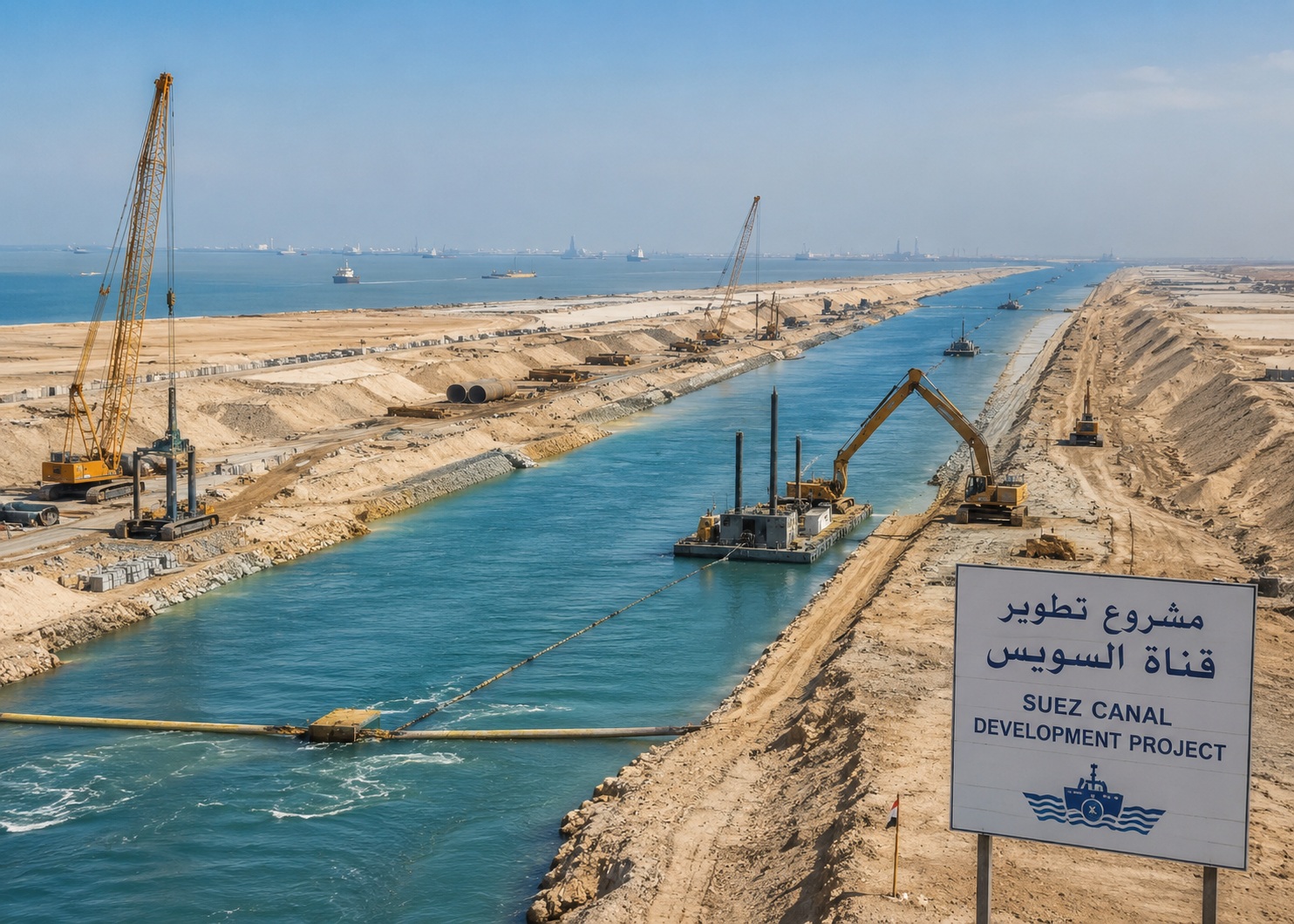
    In 2015, the largest expansion project in the Canal’s modern history was completed. Increased capacity and significantly shorter transit times further strengthened the Canal’s strategic importance for global maritime transport.


    At the same time, however, the international scientific community began paying close attention to the accelerating spread of numerous Lessepsian species throughout the Mediterranean. Species such as the lionfish (Pterois miles) and the silver-cheeked toadfish (Lagocephalus sceleratus) have continued expanding westwards, producing significant ecological, economic and social impacts across the region.


    More than a decade after the Canal’s expansion, science now has access to considerably more evidence than was available in 2015. These new findings raise important questions about how major engineering projects may influence the functioning of entire marine ecosystems and highlight the growing need for even closer international scientific cooperation.


    This article aims to present the scientific knowledge that has emerged over the past decade, highlight the key questions currently being discussed within the international scientific community and contribute to a well-informed public dialogue on the future of the Mediterranean.


    The Suez Canal:


    The Engineering Project That Changed Global Trade


    The Suez Canal is one of the most significant engineering achievements in human history. Officially inaugurated on 17 November 1869, it created, for the first time, a permanent maritime connection between the Mediterranean Sea and the Red Sea.


    This new shipping route dramatically reduced the time required to transport goods between Europe and Asia by eliminating the need to sail around Africa via the Cape of Good Hope. Today, the Suez Canal remains one of the world’s most important maritime corridors, carrying a substantial share of global seaborne trade.


    However, this same connection also enabled something unprecedented in the history of the Mediterranean: the natural movement of marine organisms from the Red Sea into the Mediterranean Sea. This phenomenon became known as Lessepsian Migration, named after the French engineer Ferdinand de Lesseps, who designed and led the construction of the Canal.


    For more than a century, this migration progressed at a relatively slow pace. Following the expansion of the Suez Canal in 2015, however, the rate of species movement increased significantly. One of the principal factors that had previously slowed Lessepsian migration was the presence of a natural ecological “filter”: the Great Bitter Lakes, located in the central section of the Canal.


    As discussed throughout this article, the 2015 expansion of the Suez Canal represents an important factor contributing to the spread of Lessepsian species. It is not, however, the only one. Modern scientific research also recognizes climate change as a major driver influencing the dynamics of biological invasions across the Mediterranean.


    The Tropicalization of the Mediterranean


    A Second Driver Accelerating Biological Invasions


    The spread of Lessepsian species cannot be explained solely by the Suez Canal. In recent years, the international scientific community has increasingly highlighted that climate change and the continuous rise in Mediterranean sea temperatures are creating progressively more favourable conditions for the establishment and reproduction of species originating from the Red Sea.


    This process is known as the Tropicalization of the Mediterranean. It describes a gradual ecological transformation in which Mediterranean marine ecosystems increasingly acquire characteristics similar to those of tropical and subtropical seas.


    As average seawater temperatures continue to rise, a growing number of tropical species are able to survive the winter, reproduce more successfully and gradually expand their distribution into new areas of the Central and Western Mediterranean.


    Contemporary scientific understanding now views biological invasions as the result of the interaction of multiple environmental and human-induced factors rather than the consequence of a single cause. The operation of the Suez Canal over the past decade, the environmental changes associated with its 2015 expansion, climate change, rising sea temperatures and other anthropogenic pressures all interact to create increasingly favourable conditions for the establishment and spread of Invasive Alien Species (IAS) throughout the Mediterranean.


    This complexity makes the development of integrated management policies more important than ever. Protecting the Mediterranean cannot rely on a single intervention, nor can it be explained by a single factor. It requires a combination of scientific research, transboundary cooperation, prevention measures and continuous environmental monitoring.


    ALKIA believes that understanding the Tropicalization of the Mediterranean is a fundamental prerequisite for developing effective biodiversity conservation policies. Only through a comprehensive and multidisciplinary approach can the relative contribution of each factor be assessed more accurately, allowing solutions to be designed that reflect the complex reality of the Mediterranean ecosystem.


    2015: The Project That Raised New Scientific Questions


    In 2014, Egypt announced the largest expansion project of the Suez Canal since its original construction in 1869. The project’s primary objectives were to increase the Canal’s capacity, enable two-way vessel traffic along longer sections of the route and further strengthen the Canal’s strategic role in global trade.

    The expansion was completed and officially inaugurated on 6 August 2015, representing a remarkable engineering and economic achievement for Egypt.


    More than a decade later, however, the international scientific community now has access to substantially more information regarding the evolution of Lessepsian species populations throughout the Mediterranean. These data have given rise to new scientific questions concerning not only Mediterranean ecology but also the way major engineering projects with potential transboundary environmental implications are planned, assessed and monitored.


    ALKIA believes that this discussion should be based exclusively on scientific evidence, international dialogue and the search for practical, evidence-based solutions. Within this context, four key issues deserve particular attention.


    Four Key Scientific Questions


    1.The Accelerated Completion of the Project


    The expansion was completed in approximately 12 months, whereas the original implementation schedule anticipated a construction period of around 36 months.


    The speed at which the Suez Canal expansion was completed attracted considerable international attention, given that it represented one of the largest engineering interventions ever undertaken along a globally significant maritime corridor.


    The scientific question is not whether the project could be completed within such a timeframe. Rather, it is whether the available time was sufficient to allow for a comprehensive assessment of all potential transboundary environmental consequences associated with an intervention of this magnitude.


    2.Environmental Assessment of Transboundary Impacts


    The expansion of the Suez Canal is not an issue affecting Egypt alone, despite the country’s approximately 1,000 kilometres of Mediterranean coastline. It is an engineering project that connects two distinct marine basins and therefore has the potential to influence the shared natural heritage of every Mediterranean nation.


    ALKIA believes that projects of this scale should be accompanied by comprehensive assessments of their potential transboundary environmental impacts, particularly when internationally significant marine ecosystems may be affected.


    For this reason, ALKIA supports the continued examination and evaluation of the available scientific evidence with the objective of strengthening environmental governance for future infrastructure projects of comparable international importance.


    2015: Four Scientific Questions

    Issue Why It Matters
    ⏱️ Implementation timeline  Project completed in approximately 12 months instead of 36
    🌍 Transboundary impacts  Potential environmental implications for the entire Mediterranean
    🌊 Natural biological barriers  Possible alteration of natural mechanisms limiting species dispersal
    🤝 Future solutions  Need for stronger international scientific cooperation


    3.The Role of Natural Biological Barriers


    The Great Bitter Lakes are far more than two lakes located along the course of the Suez Canal. For many decades, they functioned as one of the most important natural mechanisms limiting the movement of marine organisms between the Red Sea and the Mediterranean, helping to slow biological invasions into the Mediterranean basin.


    The exceptionally high salinity of the lakes—formed through decades of intense evaporation before the Canal itself was constructed—created a natural biological barrier for numerous marine organisms. Many species originating from the Red Sea found it difficult to survive or cross this hypersaline zone, significantly reducing the rate at which they became established in the Mediterranean.


    This natural “biological filter” did not completely prevent Lessepsian Migration. It did, however, act as an important moderating mechanism, slowing the invasion process and providing Mediterranean ecosystems with additional time to adapt to changing ecological conditions.


    For more than a century, this ecological balance remained largely intact despite the continuous operation of the Canal.


    The extensive engineering works carried out during the 2015 expansion significantly altered the physical characteristics of important sections of the Canal. ALKIA considers the potential effects of these interventions on the functioning of the Great Bitter Lakes as a natural biological barrier to be an important scientific issue that deserves systematic evaluation by the international scientific community.


    4.How Could Natural Biological Barriers Be Restored?


    The fourth—and perhaps most important—question concerns not the past, but the future.


    If the natural mechanisms that once limited the movement of marine species have been weakened, can modern science contribute to developing new solutions? ALKIA believes that this question deserves thorough investigation.


    Today, a range of technological and ecological approaches could be evaluated at the international level with the objective of creating—or restoring—an effective biological barrier, while fully preserving the safe and uninterrupted operation of the Suez Canal and the vital role it plays in global maritime trade.


    This proposal is not a ready-made engineering solution, nor does it advocate any specific method of implementation. Rather, it is an invitation to the international scientific community to explore all available options, assess their effectiveness and determine whether they could contribute to reducing biological invasions into the Mediterranean.


    Protecting biodiversity is not incompatible with economic development. On the contrary, modern environmental governance seeks to reconcile technological progress with prevention, scientific knowledge and the sustainable management of natural ecosystems.


    🌊 The Four Guiding Principles of the ALKIA Proposal

    Principle Objective
    🔬 Scientific Evidence  Evaluate all available scientific data.
    🌍 International Cooperation  Foster collaboration among governments, scientists and international organizations.
    ⚙️ Innovative Technical Solutions  Explore modern biological or hybrid barrier approaches.
    🌊 Protecting the Mediterranean  Reduce the spread of Lessepsian species without affecting maritime navigation.


    How Is the Suez Canal Connected to Lionfish and Silver-cheeked Toadfish?


    For most people, the Suez Canal is simply a major shipping route located thousands of kilometres away from the Greek coastline. In reality, however, the environmental consequences of such a significant marine connection extend far beyond the Canal itself, reaching the beaches, ports and fishing grounds of the eastern Mediterranean on a daily basis.


    Most of the species collectively known as Lessepsian species entered the Mediterranean through the Suez Canal. Some have successfully established viable populations, reproduced and spread across almost the entire Eastern Mediterranean, while many continue expanding westwards.


    Among the most representative examples are two species that have already transformed the daily reality of Greek fisheries: the lionfish (Pterois miles) and the silver-cheeked toadfish (Lagocephalus sceleratus).


    Over the past decade, biological invasions in the Mediterranean have continued to intensify, highlighting the need for a deeper understanding of the processes driving their spread and for coordinated international responses based on scientific evidence.


    Lionfish

    The lionfish (Pterois miles) is a highly efficient predator. Its rapid reproduction, the absence of natural predators and its remarkable adaptability have made it one of the most significant invasive species in the Mediterranean.

    Its presence directly affects populations of many native fish and invertebrates, while also creating new challenges for divers, fishers and the management of marine ecosystems.

    ALKIA believes that the responsible consumption of lionfish can become one of the practical tools for helping to reduce its populations. Beyond its ecological significance, lionfish is a high-quality, nutritious and excellent-tasting fish that can contribute to sustainable management efforts.


    👉 Read also: Lionfish: Beautiful in Appearance, Challenging to Manage


    Silver-cheeked Toadfish

    The silver-cheeked toadfish (Lagocephalus sceleratus) ranks among the Lessepsian species with the most severe socio-economic impacts in the Mediterranean.

    Its exceptionally powerful teeth damage fishing nets, longlines and catches, causing substantial economic losses for professional fishers. At the same time, the tetrodotoxin (TTX) contained in its internal organs and skin is highly toxic to humans. This toxin is not neutralized by freezing or by cooking at boiling temperatures.

    Today, the continued spread of the silver-cheeked toadfish represents one of the most significant challenges facing the coastal fishing communities of the Eastern Mediterranean.


    👉 Read also: Silver-cheeked Toadfish: The Mediterranean’s Most Dangerous Invasive Fish


    The Consequences Extend Far Beyond Biodiversity

    The spread of Lessepsian species affects far more than marine ecosystems alone. Its impacts extend to the economy, fisheries, public health, tourism and, ultimately, the everyday lives of millions of people living around the Mediterranean.


    Consequences of the Spread of Lessepsian Species

    Sector Impacts
    🌿 Biodiversity Competition with native species, disruption of food webs and degradation of marine ecosystems.
    🎣 Fisheries Damage to fishing gear, loss of catches and increased operational costs.
    ⚕️ Public Health Risks associated with toxic or venomous species, including the silver-cheeked toadfish and the lionfish.
    🏖️ Tourism Impacts on recreation, diving activities and other marine-based tourism.


    What does ALKIA propose?

    ALKIA supports strengthening scientific research, international cooperation and preventive action, while encouraging the exploration of solutions capable of reducing the spread of invasive species without compromising the safe and efficient operation of international maritime navigation.


    Why is prevention more important than response?


    Experience over the past decade has shown that once an invasive species becomes established and develops large self-sustaining populations, achieving complete control is extremely difficult and, in many cases, impossible.


    For this reason, modern environmental management places increasing emphasis on prevention, early scientific monitoring and international cooperation. Protecting the Mediterranean cannot rely solely on addressing the consequences of biological invasions. It also requires measures that tackle their underlying causes before they evolve into irreversible ecological and socio-economic challenges.


    Can the Next Decade Change the Mediterranean?


    Today, the Mediterranean stands at a defining moment. On one hand, populations of Lessepsian species continue to expand, affecting biodiversity, fisheries, the economy and the daily lives of millions of people. On the other hand, science now possesses far greater knowledge than it did a decade ago and is increasingly capable of proposing solutions that were previously unavailable.


    ALKIA believes that protecting the Mediterranean cannot depend solely on managing the consequences of biological invasions. The real challenge lies in prevention. Early scientific assessment, international cooperation and the development of innovative solutions that protect marine ecosystems while safeguarding economic development and international maritime navigation should form the foundation of future policy.


    The European Union’s Multiannual Financial Framework (MFF) 2028–2034, together with the Common Fisheries Policy (CFP), offers a unique opportunity to support coordinated transnational initiatives that strengthen the Mediterranean’s resilience against invasive marine species.


    With coordinated action, robust scientific evidence and sustained political commitment, the coming decade can become a genuine turning point for the Mediterranean.


    These principles form the foundation of ALKIA’s mission.


    ALKIA Statement

    ALKIA works towards a Mediterranean where science comes before crises, prevention comes before consequences and cooperation comes before conflict.


    We believe that protecting biodiversity is not an obstacle to development. On the contrary, it is a fundamental prerequisite for a sustainable economy, resilient fisheries, healthy marine ecosystems and safe, thriving communities.


    The Mediterranean is a shared sea. Its environmental challenges do not recognize national borders, and their solutions require scientific evidence, institutional dialogue, international cooperation and the active participation of all those who live and work along its shores.


    Guided by knowledge, innovation and collaboration, ALKIA contributes to the development of practical solutions that strengthen the Mediterranean’s resilience to today’s environmental challenges.


    The Mediterranean connects us. Protecting it is our shared responsibility.


    ALKIA VISION 2035


    The above vision represents ALKIA’s strategic direction for protecting the Mediterranean through 2035.


    Sources & References

    🟡 Field Observations & Citizen Science

    Field observations contributed by divers, citizens, professional fishers and scientists across the Eastern Mediterranean.


    🟢 Scientific Literature

    Published scientific studies on the Suez Canal.

    Research on the ecology, spread and management of Lessepsian species in the Mediterranean.


    🔵 Official Databases

    • EASIN
    • ELNAIS
    • CIESM
    • IUCN


    ALKIA Living Article

    This article is a ALKIA Living Article and will be updated as new scientific evidence, research findings and institutional developments concerning the Suez Canal and invasive marine species in the Mediterranean become available.


    First published: 12/7/2026
    Last updated: 13/7/2026
    Current version: 1.2